Jury Kills Musk's $134B OpenAI Suit in 2 Hours, Google I/O Keynote Today
Federal jury unanimously rejects Elon Musk's $134B claims against Altman and OpenAI on statute of limitations. Google I/O keynote starts today.
 ByAsh·5 min read
Two stories today. The first one just dropped yesterday evening and it's a big deal for the entire AI industry. The second one is literally happening as you read this.
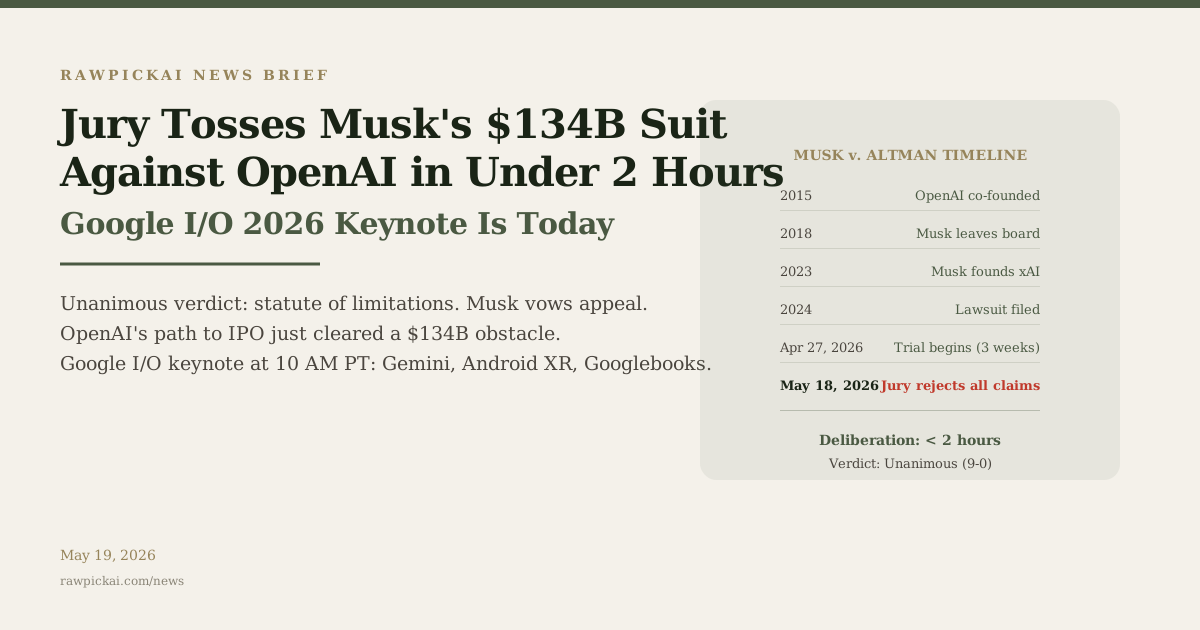
Musk v. Altman: Over in Less Than Two Hours
After three weeks of testimony, a nine-person federal jury in Oakland took less than two hours on Monday to unanimously reject every claim Elon Musk brought against Sam Altman, Greg Brockman, OpenAI, and Microsoft.
The core dispute: Musk co-founded OpenAI in 2015 as a nonprofit and donated $38 million. He left the board in 2018. In 2024, he sued, arguing Altman and Brockman betrayed the nonprofit mission by creating a for-profit entity and enriching themselves. He sought $134 billion in damages - roughly demanding that OpenAI and Microsoft cough up what he called "wrongful gains."
The jury didn't even get to whether those claims had merit. They found Musk filed outside a three-year statute of limitations, and that was enough. Judge Yvonne Gonzalez Rogers immediately adopted the advisory jury's verdict. Case dismissed on all counts.
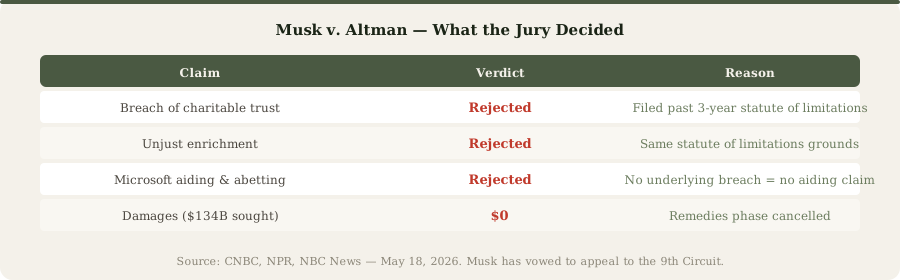
The trial featured testimony from Altman, Brockman, Microsoft CEO Satya Nadella, and Musk himself. OpenAI's lawyers successfully argued that Musk had known about the for-profit restructuring for years before suing - and that he'd actually pushed for a for-profit structure himself, on the condition he'd retain control. When the other co-founders disagreed, he walked away and started xAI (which is now part of SpaceX).

Musk posted that on X within hours. His legal team has confirmed they'll appeal to the 9th Circuit Court of Appeals.
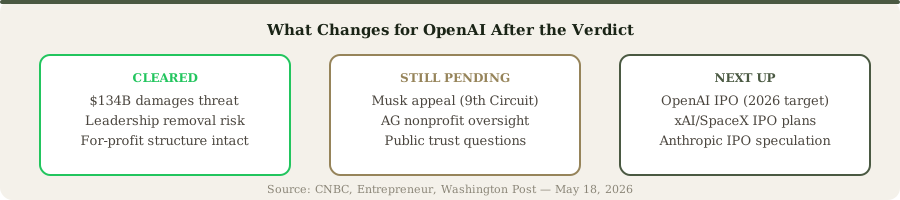
My take: This verdict matters far beyond the legal specifics. OpenAI has been operating under a $134 billion cloud for over two years - potential damages that would have been existential. That cloud just lifted. Altman stays as CEO. Brockman stays as president. The for-profit structure stays intact. And critically, the OpenAI IPO - which everyone in Silicon Valley expects in 2026 - just got its biggest legal obstacle cleared.
For us as AI tool users, here's what I'm actually thinking about: this clears the path for OpenAI to raise even more capital and push harder on GPT-5.5 and whatever comes next. It also means the Musk vs. Altman rivalry continues - xAI/SpaceX vs. OpenAI - which keeps driving competitive pressure on pricing. That's good for consumers. The ChatGPT $20/mo (≈₹1,860/mo) Pro tier exists partly because Claude and Gemini are breathing down OpenAI's neck. As long as these companies keep fighting, pricing stays competitive.
One more thing worth noting: the jury ruled on a procedural question (statute of limitations), not on the actual merits of whether Altman breached his duty. Musk's lawyers are already framing this as a technicality that an appeals court could overturn. The legal story isn't over, but the immediate pressure on OpenAI is gone.
Google I/O 2026 Keynote: Happening Right Now
Today is the day. Google's annual developer conference kicked off at 10 AM PT (10:30 PM IST) at Shoreline Amphitheatre in Mountain View. This is the biggest AI product event of the year, and based on pre-event leaks and the Android Show from last week, there's a lot coming.
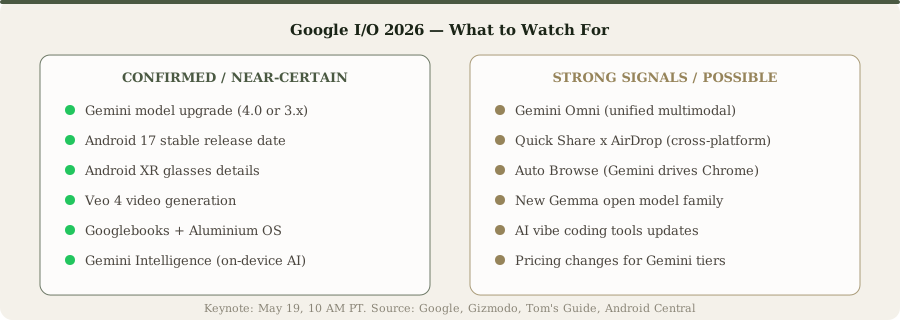
Here's what I'm watching closely:
The Gemini model update. This is the centerpiece. Multiple reports suggest a major Gemini upgrade - whether that's Gemini 4.0 or an incremental 3.x bump. Sources quoted by TechTimes say the new Gemini lands roughly at GPT-5.5 level but meaningfully behind Claude Mythos. That's a competitive position, not a leadership claim. I'm watching for concrete benchmarks and pricing - will the Gemini Advanced tier at $20/mo (≈₹1,860/mo) get meaningfully better, or will Google launch a higher-priced tier?
Gemini Intelligence on-device. This was already previewed at the Android Show. Instead of Gemini being a separate app you open, it becomes embedded in the Android OS itself - understanding context across apps. Reports indicate this requires 12GB of RAM and a flagship SoC, so it won't run on budget phones.
Googlebooks and Aluminium OS. Google announced a new laptop category last week - Googlebooks running a merged Android + ChromeOS platform. Acer, ASUS, Dell, HP, and Lenovo are making them, arriving this fall. The codename "Aluminium OS" will get an official name, presumably today. This is Google's answer to Apple's ecosystem integration story.
Android XR glasses. I'm expecting more hardware details. Meta's Ray-Ban Display glasses are at $800, with limited third-party app support. If Google shows up with a strong developer platform and competitive pricing, it reshapes the AI wearables conversation.
Auto Browse. Chrome with Gemini driving your web session - filling forms, comparing prices across tabs, making reservations. This is agentic AI in the browser, which directly competes with what Claude and ChatGPT are doing with computer use.
My take: I'll publish a full Google I/O breakdown tonight or tomorrow morning with actual announcements, not speculation. The story I'm tracking isn't "Google announces cool stuff" - it's whether Gemini actually closes the gap with Claude and ChatGPT, and whether pricing changes affect the best AI tools rankings. If Gemini Omni really ships as a unified text-image-video model within the existing $20/mo tier, that changes the value equation for anyone currently paying separately for image generators and video tools.
I'll update the Gemini review, best AI coding tools, and relevant comparison pages as soon as the announcements land.
Published May 19, 2026. Prices at ≈₹93/USD.